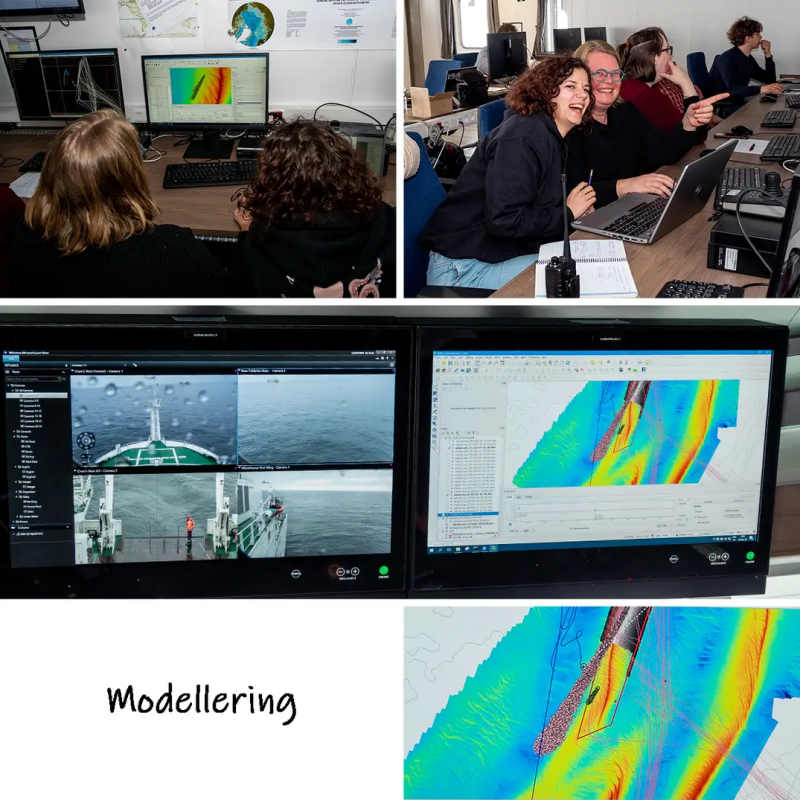
Continental Shelf Operations (COPCO from FOD Economy) embarked on a mission to track the plumes generated by sand extraction vessels operating in the Belgian sector of the North Sea. This task was carried out aboard the RV Belgica, a substantial and somewhat unwieldy research vessel. In order to achieve precise positioning for their research, they turned to the OSERIT drift model developed by the Institute of Natural Sciences, a tool I managed during two extensive sea campaigns.

Instead of grappling with the intricacies of configuring the OSERIT model—a legacy Fortran code designed for Linux systems—I streamlined the process by developing a user-friendly interface using the tkinter library in Python. This approach saved valuable time and allowed for smoother operations during the campaigns. See below some action pictures.
Reactie plaatsen
Reacties